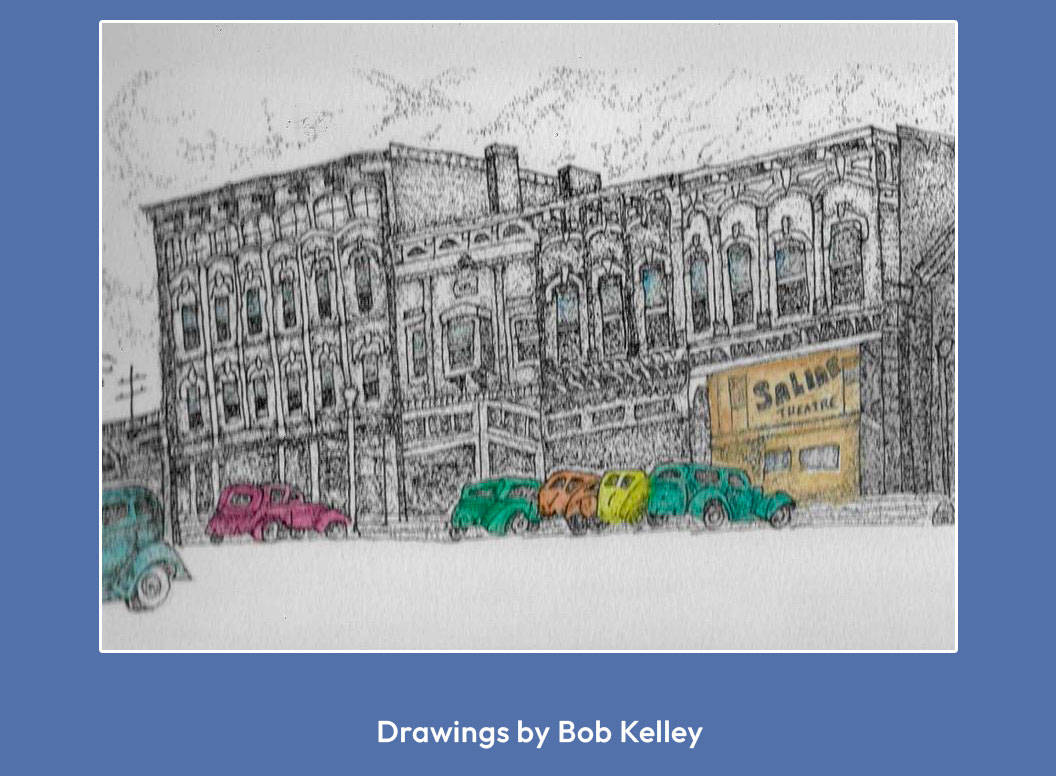

Here is a great opportunity to support the work of SASS with our long-time volunteer, Bob Kelley. Bob and his wife, Cindy, volunteer weekly in the food pantry, and Bob has offered to donate all of the proceeds from the sale of his sketches of historic City of Saline buildings.
We thank Bob for his generosity and encourage you to read his letter and research below.
To purchase one of these framed drawings, contact Bob at (734) 276-1944.

Letter from Bob
I’m Bob Kelley and I am responsible for these sketches of Saline, Michigan landmark buildings. I’ve been a resident of Saline for 40 years, during which both my children attended and graduated from Saline schools. Now both of my grandchildren are in Saline schools. I retired eight years ago from IBM Watson and, although doing some pen and ink drawing and with no training, I have never committed myself to a project like this.
I have always been impressed with the quality and quantity of historic homes and churches in the town and the surrounding area. I had also experimented with the “stippling” technique of adding shading and texture to ink drawings. This technique uses hundreds of tiny dots, applied with a special electric pen, of varying concentration to create the effect. I then experimented with adding watercolor to further enhance the image.
I considered selling multiple prints of each sketch but decided that I wasn’t interested. After all, this is simply an enjoyable hobby and was never about the money.
I have, therefore, decided to sell the matted and framed originals of the sketches at a reasonable price and to donate all proceeds to Saline Social Service. My wife and I volunteer one morning a week at the Food Pantry and have observed the valuable services provided by staff and their many volunteers.
Custom Sketches and Profiles
I would be delighted to sketch your home or other structure that is important to you. Simply text me at (734) 276-1944 and provide me with a photograph or two, and whether or not you would like me to matte and frame the picture. I’ll let you know an expected date for delivery.
I hope that you enjoy looking at the sketches and reading the attached profiles. I really enjoyed the time I spent with this local history.
City of Saline: Sketches of Historic Buildings and Homes
William H. Davenport House (Curtiss Mansion)
The William H. Davenport House, also known as the Curtiss Mansion, built for William Davenport in 1875 in Saline, Michigan. William H. Davenport was born in New York state in 1826, and arrived in Michigan with his family the next year. Davenport moved to Saline at the age of twelve after his father’s death, and began working as a mercantile clerk. In 1851 he married Zilpha Parsons, and that same year partnered with H. J. Miller to open a general store. In 1853 he bought out Miller’s interest and, over the following years, Davenport became
Saline’s most prominent merchant. In 1875, Davenport hired Detroit architect William Scott to design this house. The Davenports selected many of the furnishings for the house from manufacturer displays at the 1876 Philadelphia Centennial Exposition. In 1883, Davenport abandoned his general store, and in 1885 he opened a bank, which became publicly owned in 1902. Davenport lived in this house until his death in 1909. The house remained in the Davenport family until 1930, when family friend Carl Alward Curtiss inherited the house and its antique furnishings.
The house is a Second Empire mansion, located by itself on a city block at the entrance to Saline, surrounded by mature trees. The house is a two-and-a-half-story frame structure with a slate-covered mansard roof and corner tower. It sits on a cut stone foundation, and the exterior contains ornate bracketry, corbels, lintels, and dormers. Two original carriage barns with slate mansard roofs stand behind the house.
On the Interior, the woodwork is made from the finest hardwoods — walnut, butternut, and maple — throughout the house. The house still contains antiques purchased at the 1876 Philadelphia Exposition. The full-length windows are topped with carved interior cornices and the ceilings are decorated with sculptured plaster. It was registered on the National Register of Historic Places in 1975.
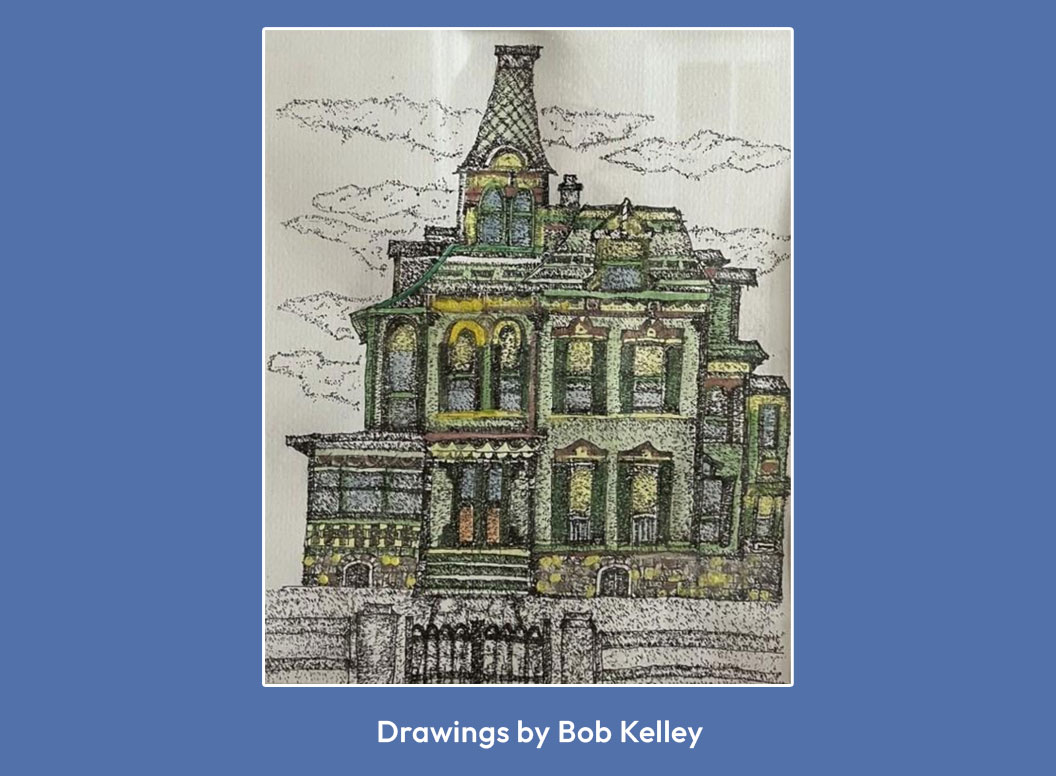
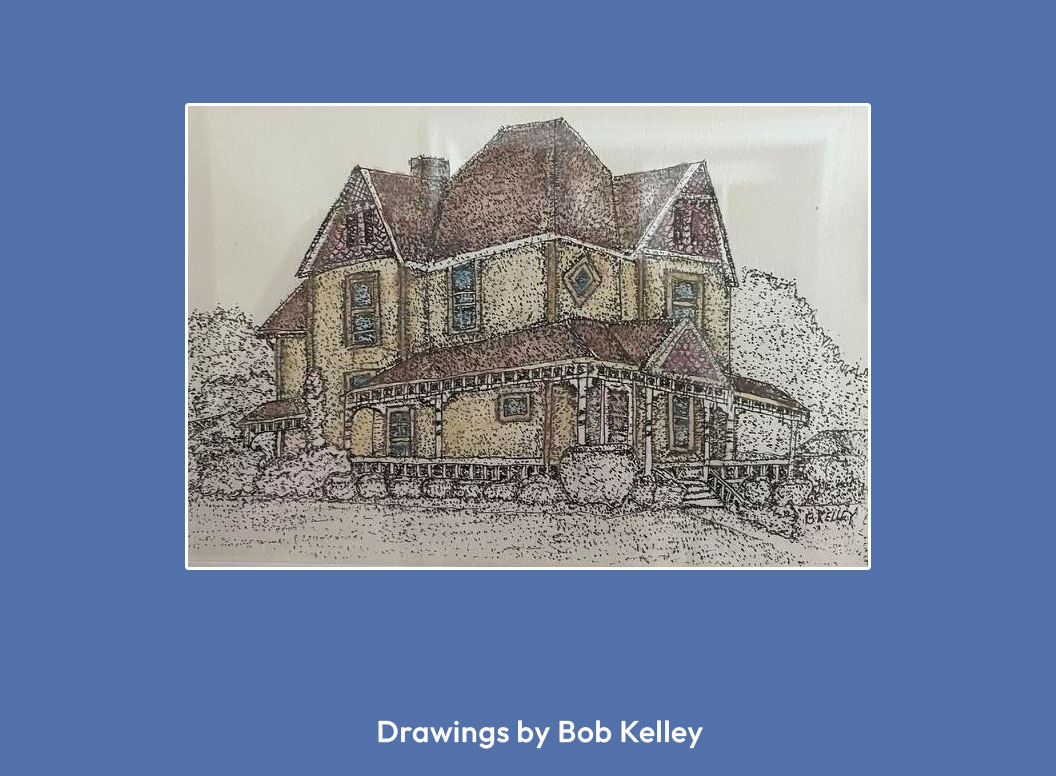
Beverly Davenport House
The Beverly Davenport House, 302 E. Henry St, Saline, Michigan was built in 1873, directly behind her father’s, Williams Second Empire Mansion. An original drawing of the planned home shows a turret that was never built. Local businessman William Davenport hired Detroit architect J.J. Smith to design this house for his son, Beverly. Beverly joined his father’s mercantile firm, and was eventually cashier and then president of the Citizens Bank. The house is a two-and-a half story frame Second Empire structure with a central projecting bay containing a flared gabled roof, squared-off top, and bargeboard trim. It has a mansard roof with porthole dormers and brackets below the eaves.
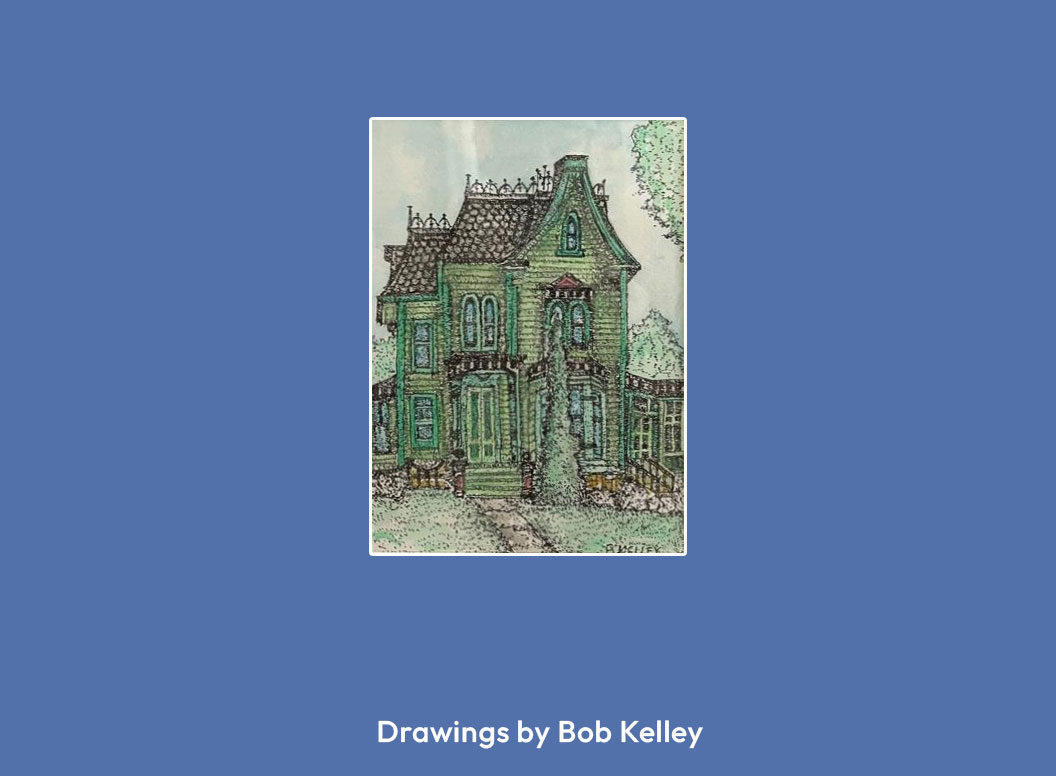
Samuel D. Van Duzer House
The Samuel D. Van Duzer House, located at 205 South Ann Arbor Street in Saline, Michigan was constructed in 1858; newspaper reports indicate it was constructed for merchant Caleb Van Husan, although tax records indicate that Samuel D. Van Duzer was the original owner. In either case, Van Duzer was living in the house by the early 1860s, and remained living there for over 50 years. Samuel Van Duzer came to Saline in 1834 from New York state, when he was age 14. He eventually went into the dry goods business, but then spent most of his career as a clerk and bookkeeper. He also served on the village’s board of trustees, and was twice elected president. Van Duzen lived in the house until his death in 1908. In 1912, the property was purchased by Mr. and Mrs. George Cook. Cook owned a livery business in Saline, and also served as president of the Village, as well as a Justice of the Peace. The Cooks did the stucco work which now covers the building. It was listed on the National Register of Historic Places in 1985.
The house is a one-and-a half story frame structure with a stucco veneer and a steeply pitched gabled roof. It has a one-story rear addition and a stucco front porch. A central dormer in the roof, facing the street, contains a Gothic-arched window and pointed-arch eaves trim. The gable ends are half-timbered.
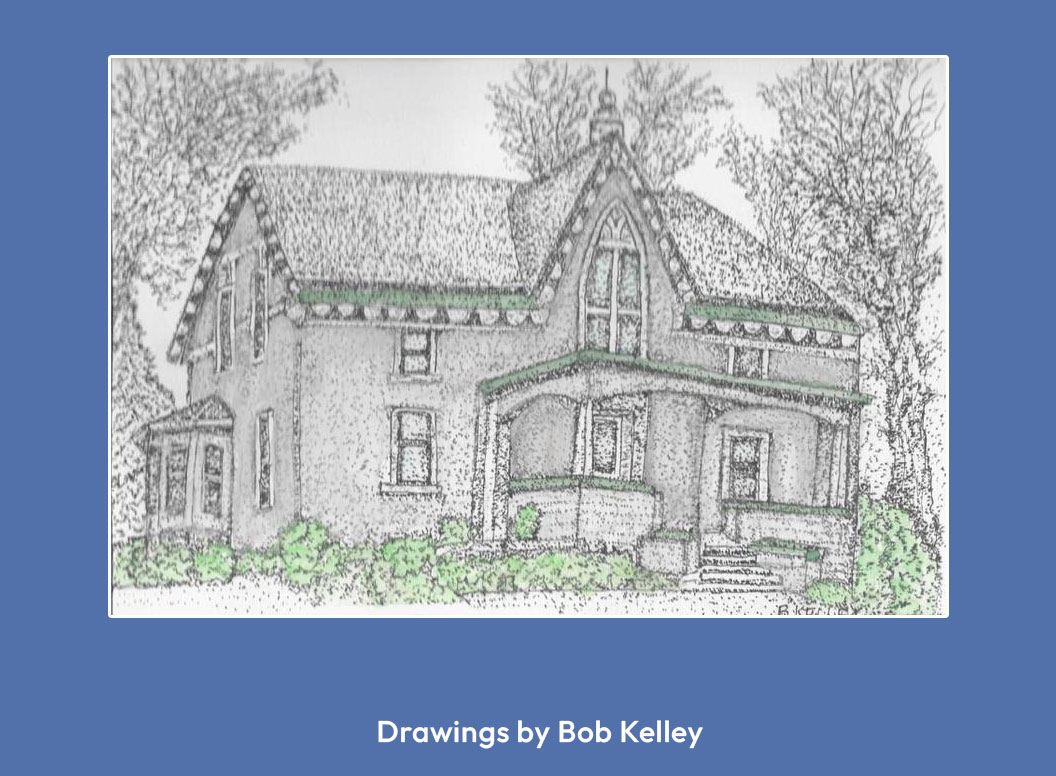
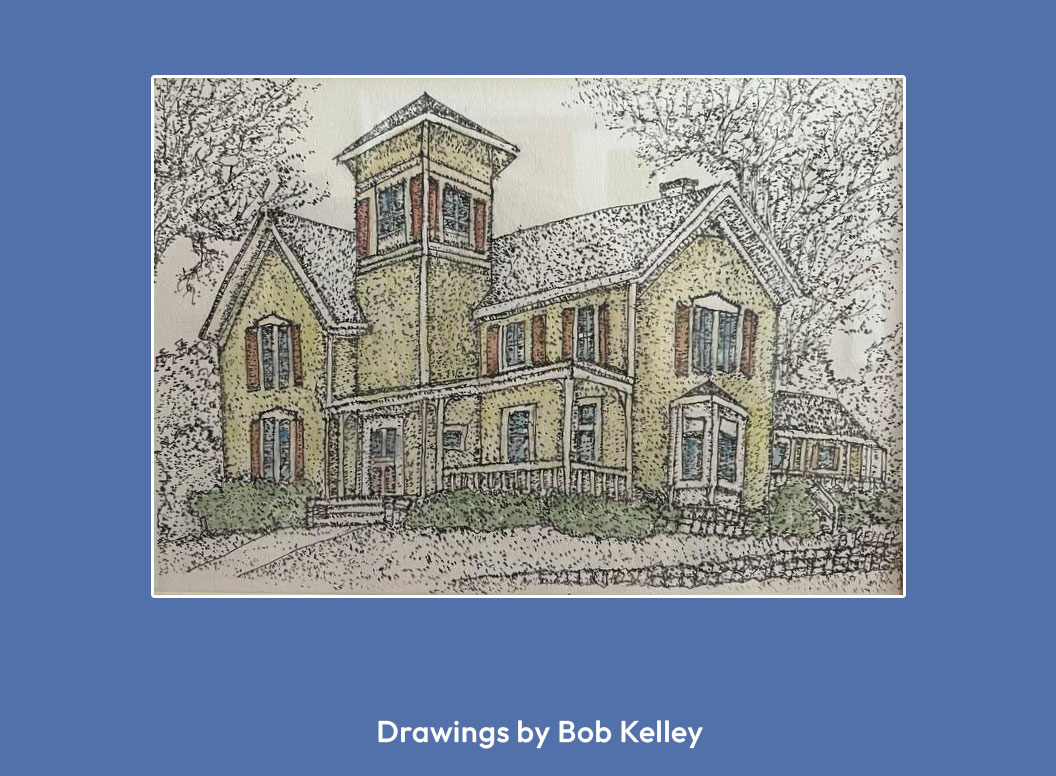
John Henry and Catherine Barr House
The John Henry and Catherine Barr House, 275 South Ann Arbor Street, was purchased by John Henry Barr (originally spelled Baehr), from Allen Risdon (son of Saline’s founder, Orange Risdon) in 1870 and built this house in 1873. They had seven children – only three survived infancy: sons William and Henry and daughter Charlotte. John Henry and his sons owned and operated an apple orchard and a successful sorghum and cider mill. The mill was located just north of the house. After John Barr’s death in 1914, the property was divided between the two sons. George inherited the house and William inherited the land. The house continued to be in the Barr family for almost 100 years.
This is a two-story Italianate Villa style house. The original house was built in the traditional “L” shape with the tower or “cupola” located where the upright and wing section meet. A two-story addition was added to the rear of the upright section between 1988-1992. The hipped-roof tower extends above the roofline and features paired windows on all four sides. The west-facing façade has a partial width porch and there is an additional large porch on the south side of the rear wing that wraps around to decking on the rear of the house. matching the details of the front porch.
Rentschler Farm
The Rentschler Farm, located at 1265 East Michigan Avenue near downtown Saline, Michigan, the 240-acre farmstead was purchased in 1825 by John Gilbert. By 1840, the property had passed into the hands of the Tate family, who farmed the land, and at some point constructed a house, barn, and tool shed on the property.
In 1901, the farmstead was put up for auction and purchased by Emanuel Rentschler. A few years later, Emanuel Rentschler moved in and expanded the barn. In 1906, he dismantled the original house and, with the help of his brother Matthew Rentschler, constructed a new house on the property. More outbuildings were added in subsequent years, including a milkhouse and henhouse. The land continued to be used by four generations of Rentschlers. By 1998, the family had sold off most of the farm in individual parcels. The last landowner, Warren Rentschler, sold the last parcel of land including the farmstead to the City of Saline at a discount. The City turned the farmstead into a museum. The farmhouse and adjacent buildings, which had been in use since 1900, were restored in 2001 by the Saline Area Historical Society, and the old farm became the Rentschler Farm Museum. The site was listed on the National Register of Historic Places in 2013.
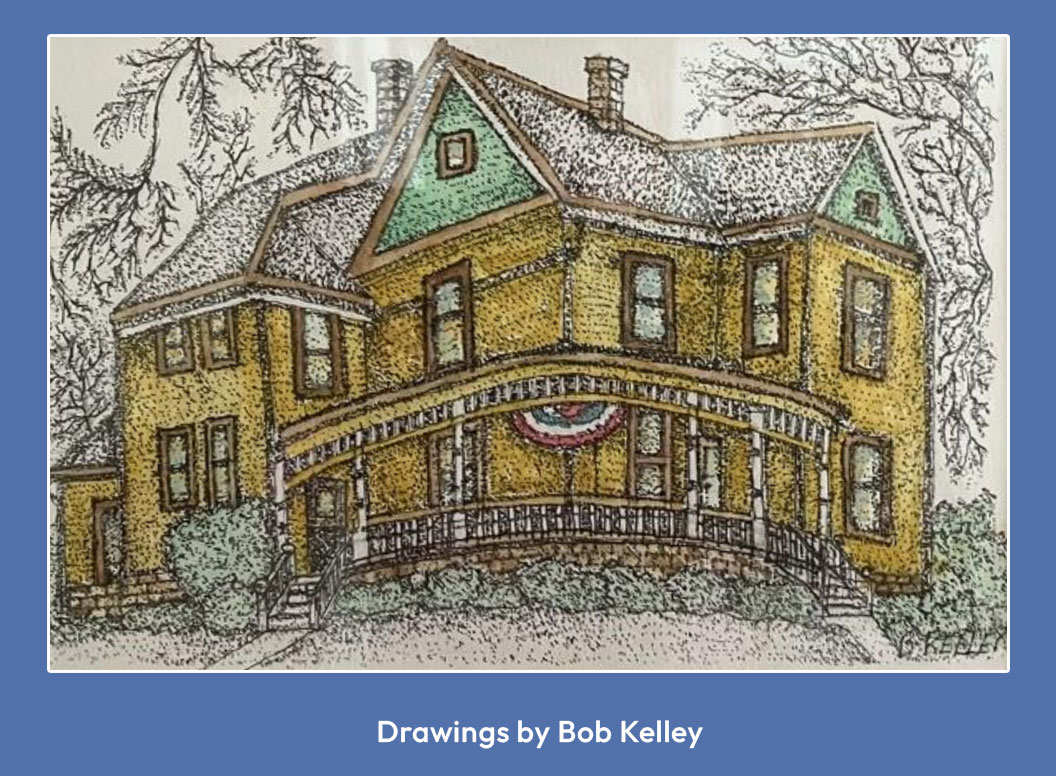
George and Gertrude Lutz House
George and Gertrude Lutz House, 103 West Henry Street, built in 1902 and acquired by George and Gertrude Lutz after their marriage in 1903 from the estate of George Nissly. The purchase price was listed at $2,000. George served as a village clerk for a number of years and was a bank employee. He died in 1904, at the age of 30, less than a year after moving into the house. His wife Gertrude remained in the house until the 1940s. This is a two-and-one-half story Queen Anne style house. The roof is hipped with matching front and side gable projections. The house has a variety of window shapes. There is a full-width front porch that wraps around to the east side. There are many elements present that are indicative of the Queen Anne style, including spindlework on the porch supports and frieze (the decorative element on bottom of the porch roof) and decorative fishscale shingles on the pediment over the entryway and on the top of the roof gable. The gable peaks also contain paired windows and decorative lattice woodwork on the top of the peaks. The current paint scheme on the trim accentuates the details, as was commonly done on Queen Anne houses in the late nineteenth and early twentieth centuries. The house is listed in the National Register of Historic Places, due to its near-original appearance.
Salem Church & Sharon United Methodist Church
The Salem Church & Sharon United Methodist Church, 19990 Pleasant Lake Road, Sharon Township (Manchester). The Salem Church is a Registered Michigan Historic Site and was built in 1876. The Salem Church merged with two other churches to become the Sharon United Methodist Church in 1968. The Reverend Edward Weiss, a Washtenaw County circuit rider, organized an Evangelical class of fifteen members in 1874. They met in a school located two miles east. Two years later, trustees Herman Gieske, Lambert Gieske and Bernhardt Kuhl, on behalf of the Evangelical Association of North America, bought land from the Rowe family in the area known as Rowes Corners. Church members hauled brick and lumber to the site. Salem Church was dedicated in November 1876. The vernacular Gothic Revival church is similar to others built in the Midwest by nineteenth-century German congregations. Stained-glass windows were installed in the early twentieth century. The denomination merged with the United Brethren Church in 1945 and with the Methodist Church in 1968. That year this church was renamed Sharon United Methodist Church.
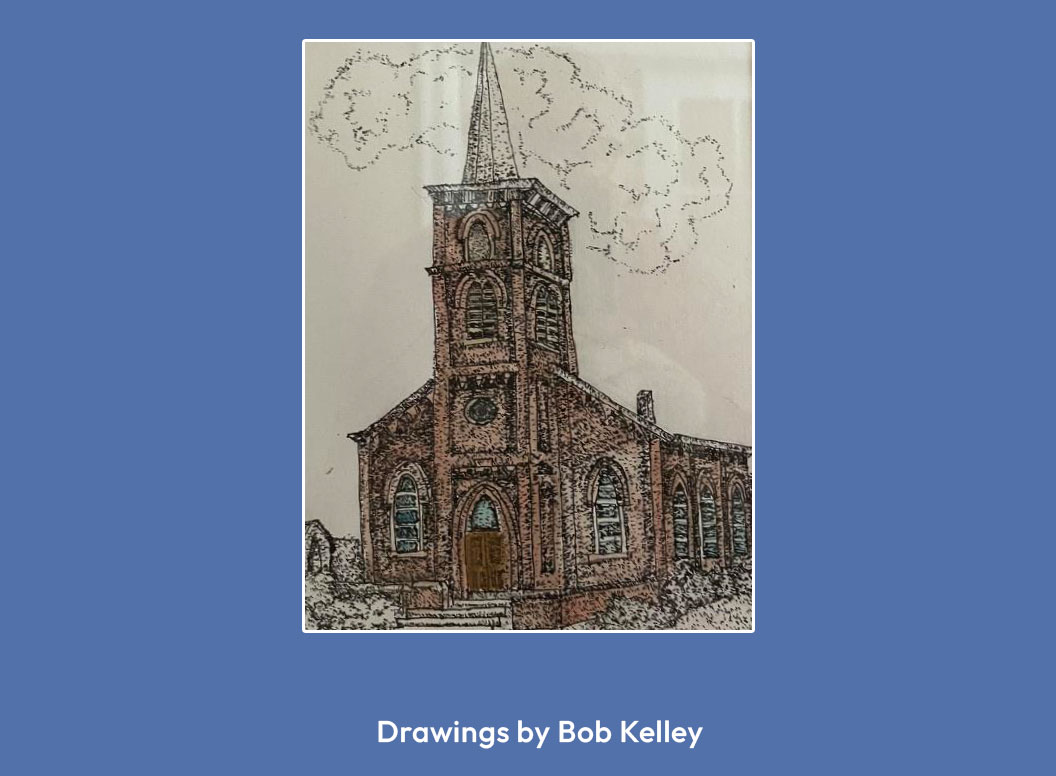
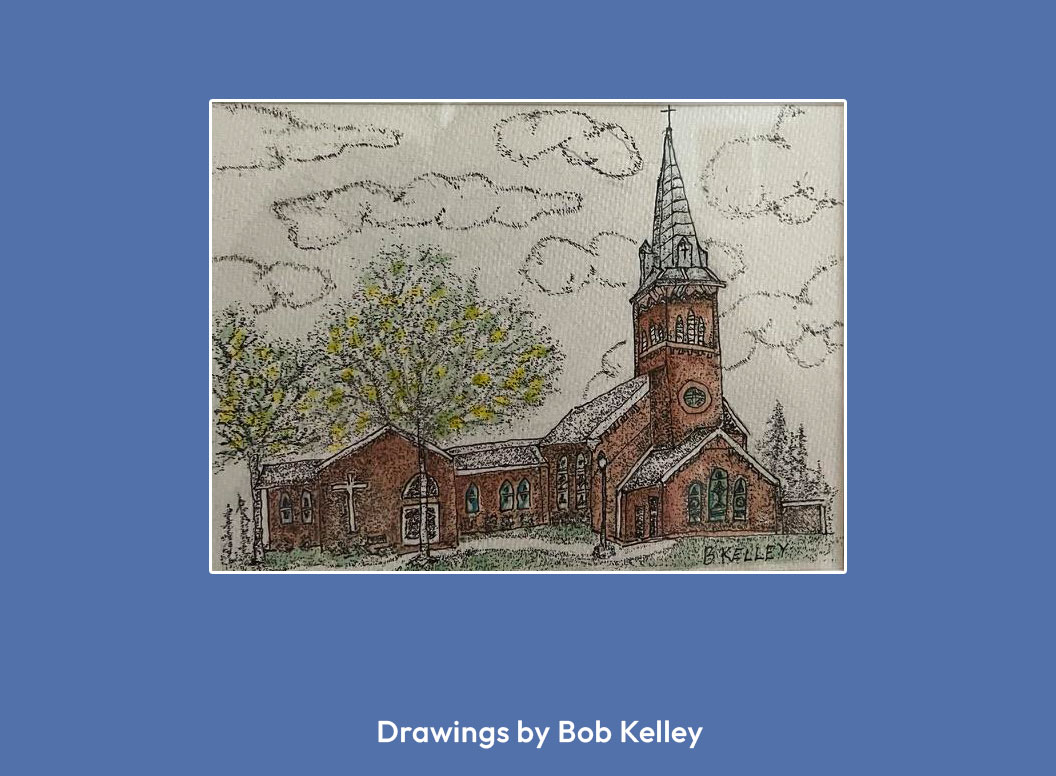
Trinity Evangelical Lutheran Church
The Trinity Evangelical Lutheran Church was organized in 1865, after its founding members had already been served for about 30 years by the famous circuit rider, the Reverend Friedrich Schmid, who traveled a set route from Ann Arbor to Detroit to Monroe and back, conducting worship services at various sites along the way.
A more regular schedule of services in Saline began when the Reverend Nathaniel Wolfe from St. John Lutheran Church in Bridgewater was willing to aid the fledgling group of Lutherans to the east, who officially organized Trinity with eleven voting members. The congregation was served by Pastor Wolfe and his successors at St. John, Rev. J. Doerfler and Rev. Frederick Meuller, until 1878. At that time, with membership having grown to 50 families, Trinity called its first resident pastor, Rev. CA. Lederer.
In the meantime, in 1871 the cornerstone was laid for a new church building on the corner of East Michigan Avenue and North Harris Street, an area formerly known to the locals as “the frog pond.” The building was completed in 1872 at the cost of $5600.
Trinity’s heritage is as the “German Church” in town, although the German language was no longer used in services by the middle of the 20th century. However, the architectural style of the church has remained a constant over the years. A number of additions changed the size of the 1872 building, but great detail has been kept in maintaining its original Gothic structure, including the soaring steeple and the tall, narrow arches of the stained glass windows.
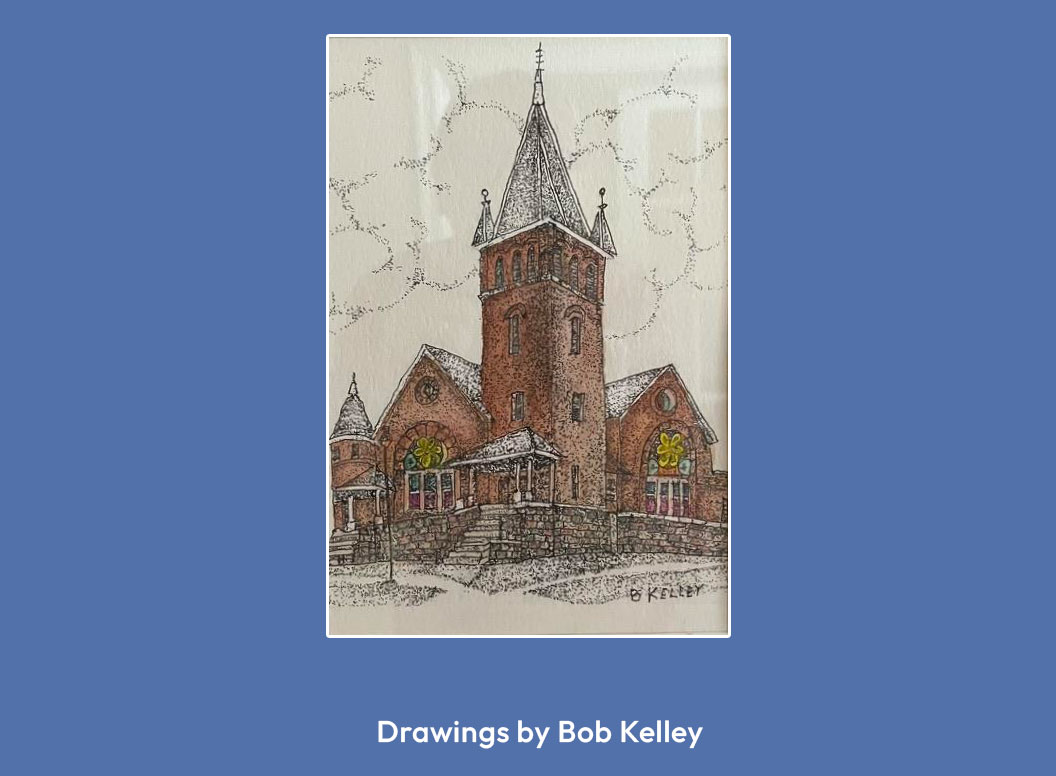
The Saline First Presbyterian Church
The Saline First Presbyterian Church, 145 E Michigan Ave, Downtown Saline, was built 1898-1899. It was added to the National Register in 1985 and designated a Michigan State Historic Site in 1995. The Saline Presbyterian Church is a brick Romanesque Revival structure, built with an irregular plan on a heavy stone foundation. It has a gable roof and a large square corner tower topped with spires; a smaller round tower is located at the southeast corner. The south and east sides of the building feature large stained glass windows. In 1831, a group of twelve Presbyterian families from Newark, New York pulled up stakes and headed westward to Detroit. The families settled in the area around what is now Saline, and immediately began holding church services. For a decade, these services were held in private homes, schools, or other meeting places; finally, in 1842, the Presbyterian congregation constructed a frame church on the site where the present church is located. This early church served the congregation until 1898, when the current church was constructed. The congregation hired Detroit architects Frederick H. Spier and William C. Rohns to design the church, and local contractor Conrad Schaffer and Son to build it. The structure and interior furnishings cost a total of $5,981.
New porches and steps were constructed in 1954, using stones quarried from the same location as the original stones were. In the mid-1970s, the building was extensively renovated both inside and out. The sanctuary was renovated and restored in 1998, and is still used for services.
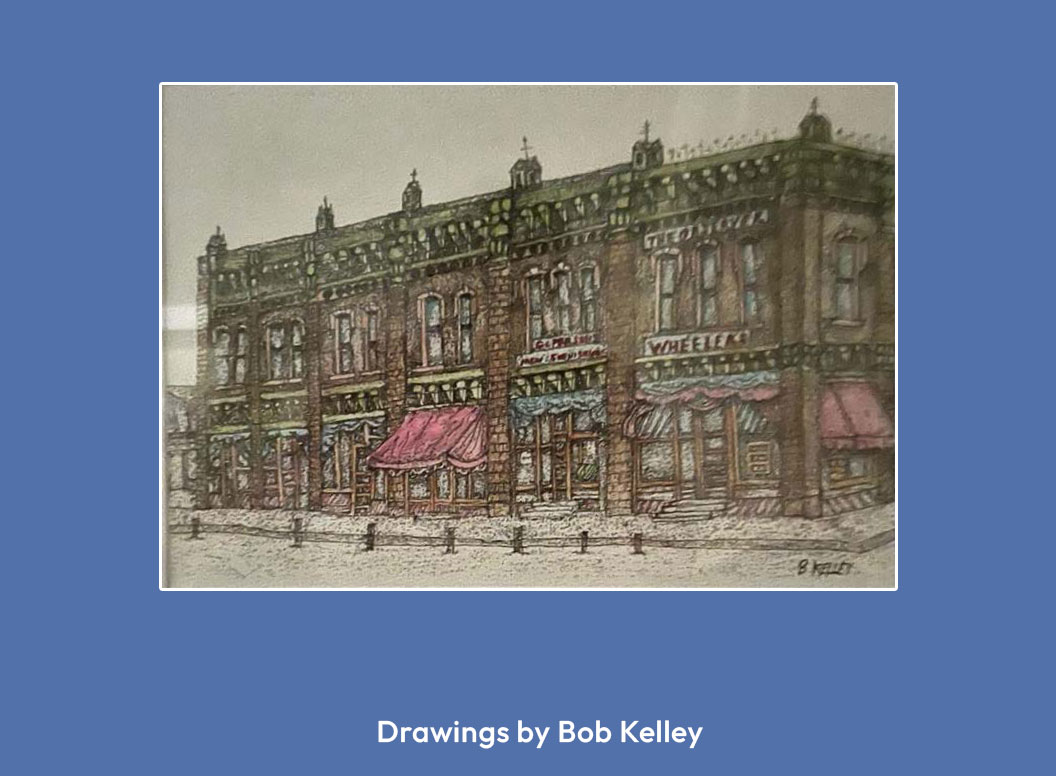
Union Block
The Union Block is a commercial building located at 100-110 East Michigan Avenue in Saline, Michigan. It was listed on the National Register of Historic Places in 1985.
It is unclear when it was constructed, but it was almost certainly between 1872 and 1882. The building appears to have been constructed in two parts: The western two bays (on the corner) and the eastern four bays. Land speculator Henry J. Miller purchased the western corner lot in 1871. By 1880 he had constructed two buildings: the current two-bay portion of the Union Block, and another brick building around the corner on Ann Arbor Street (which was destroyed by fire in 1881). The eastern section of the building was purchased by Sherman Hinckley in 1877; Hinckley likely constructed the eastern section shortly thereafter. By 1879, Miller and Hinckley co-owned a store in one bay of the building, and Hinckley apparently purchased the entire building at some point. He owned it until his death in 1891. Throughout the years, the Union Block has housed a variety of commercial stores on the ground floor and offices on the second. Stores in the building have included a harness shop, jewelry store, drug store, post office, general store, meat market, and Salvation Army.
The Union Block is a two-story, six-bay, rectangular red brick Italianate commercial building. It measures 132 feet by 60 feet, and occupies a corner lot, fronting directly onto the sidewalk. Bays are divided by brick pilasters topped by decorative capitals. The two sections of the building have slightly different windows and differing secondary cornice line. Three rectangular windows topped by brick hoodmolds and keystones are in each of the west two bays, while two rectangular windows topped by brick hoodmolds without keystones are in each of the east four bays. Dentillated brickwork and an ornamental bracketed cornice top the structure; the original secondary cornice has been removed.
In the rear is a two-story wooden porch running along the length of the building. (Wikipedia)
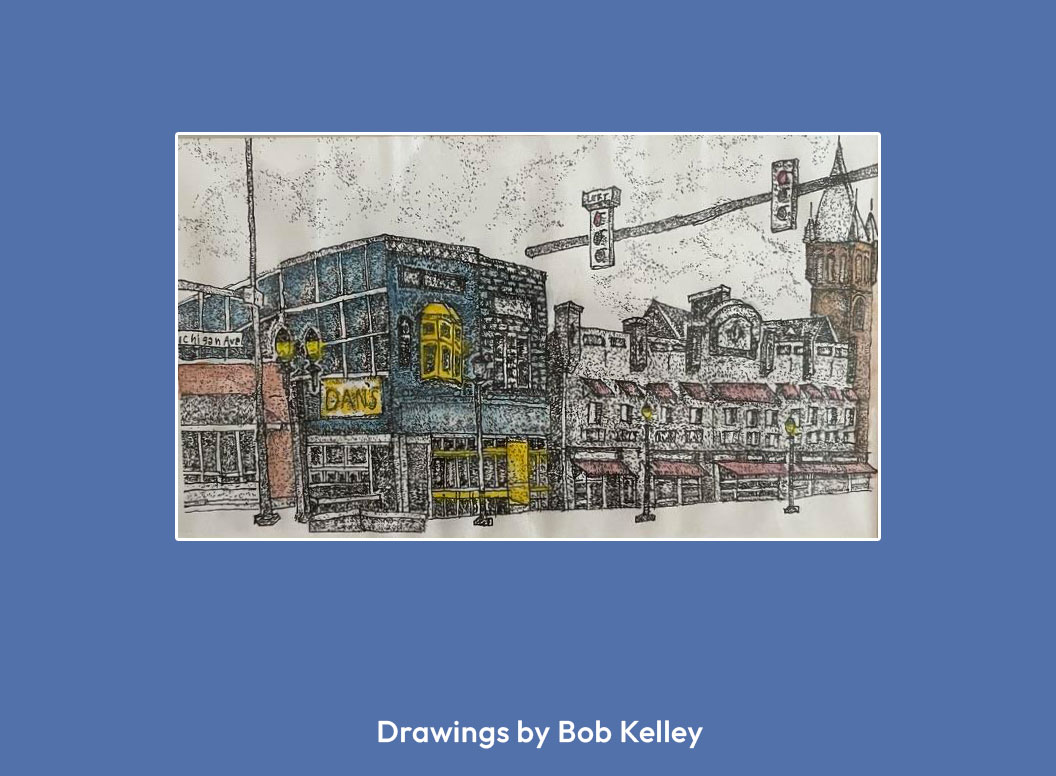
Downtown Saline: northeast corner
The downtown Saline northeast corner was occupied by a large wood frame structure, which became the Schafer Saloon in 1880. That building was replaced by a brick building circa 1917 (recently the Pineapple House). The 19th century downtown area included other stores that were mainly wood with a few being brick. It was a busy place.
Georges Bar/Dan’s Tavern In 1899 John Schaffer had a saloon on the corner and a poolroom was in the next building.
The earlier George’s Bar was re-opened as Dan’s Bar / Tavern by Dan Kolander in 1998.
The Saline Theatre
The first movie theater in Saline was The Liberty, owned by a man named Zimmerman. It started in the 1920s and showed silent movies. For several years, Zimmerman was successful but around the start of 1929, the business began to fail and he began operating at a loss. He closed the theater May 17, 1930 and its loss was keenly felt. The location is not known but perhaps it was in the same location as the Saline Theatre described below.
The Saline Theatre was dedicated July 1, 1938 in what is now Benny’s Bakery on W. Michigan Avenue. The front was Masonite painted in a deep cream or buff color with a trim of Dutch Blue. The words “Saline Theatre in streamlined letters flowed across the front. Double swing doors on the east side led to the foyer from which one entered the theatre proper. Here was found a large center aisle with comfortable seats on either side to accommodate 270 persons. The screen was the newest sound type, as was used in large cities at that time.
The projection room was directly over the front entrance and of fireproof construction. In the basement were modern sanitary rest rooms. The floor had been completely and sufficiently reinforced to bear the weight of a capacity house. A modern air-cooling system was installed.
Wesley M. Gilpin and Lewis M. Lash were the proprietors. They contracted for the best pictures which MGM, Fox and Paramount produced, which were shown here after they had appeared in the larger cities. They operated daily with evening shows, admission for children 10c, for adults 25c.
The Finch Building: downtown Saline southwest corner
Saline’s first commercial building, this was a wood structure, built in 1830. In 1915, it burned down and was replaced by a brick bank (today’s Brecon Grille).